Clean photos cannot prove that a used vehicle has never suffered structural damage or water exposure. Buyers need a repeatable inspection process that combines body measurements, structural observations, interior clues, electronics and a road test.
Check repaired and replaced panels
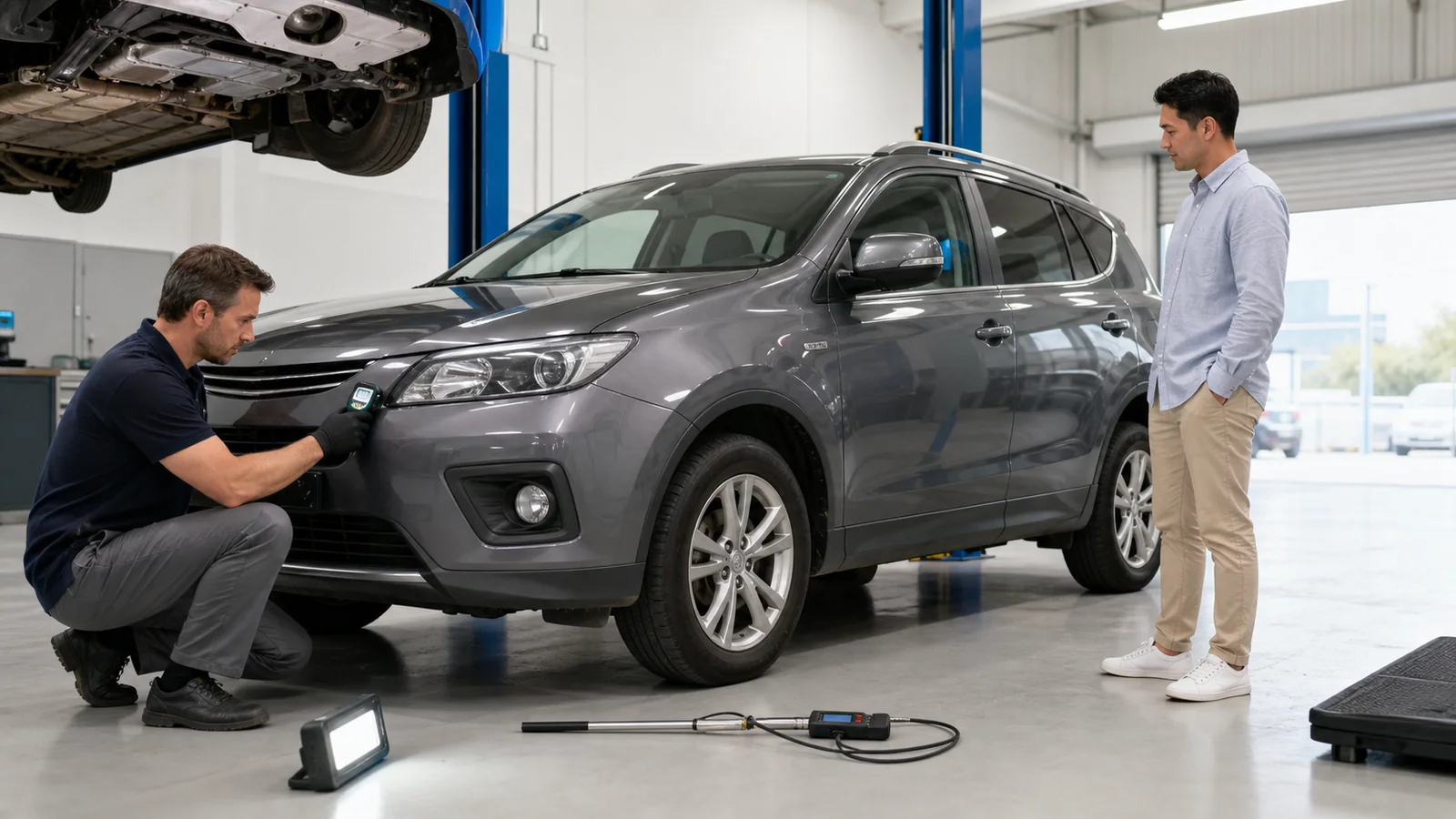
Paint-thickness readings across multiple body panels can identify inconsistent refinishing, but readings must be interpreted with visual evidence. Inspect panel gaps, fastener marks, welds, sealant, overspray, glass dates and lamp dates. A replaced cosmetic panel is different from damage affecting pillars, rails, suspension mounting points or the passenger safety structure.
Look beyond the visible body
Request clear photos of the engine bay, front and rear rails, door apertures, spare-wheel well and underbody. Inspectors should note deformation, fresh coating, non-factory welds, corrosion, leakage and damaged mounting points. The steering, braking and suspension response should also be checked during a controlled road test.
Screen for water exposure
Possible flood indicators include silt or corrosion under carpets and seats, moisture in lamps, oxidized connectors, unusual odor, inconsistent upholstery replacement and electrical faults. No single clue proves flooding; the conclusion should come from several observations plus diagnostic scanning and function tests.
Define your acceptance standard
Some buyers accept properly repaired cosmetic damage at the right price, while others require no repaired panels. State your rule before sourcing begins. Huisheng can screen available units against the requested condition standard and provide photos, video topics and inspection notes for comparison.
Buyer checklist
- Paint-thickness readings across panels
- Pillars, rails and mounting points
- Welds, sealant and fastener marks
- Carpet, connectors and spare-wheel well
- Diagnostic scan and electrical functions
- Road test, steering and braking
Frequently asked questions
Does repainting mean the car is unsafe?
Not necessarily. Cosmetic repainting and structural repair are different, which is why the location and quality of repair matter.
Can photos alone rule out flood damage?
No. Photos help, but physical inspection, diagnostic checks and function tests provide stronger evidence.